
August 21, 2026
This is an early year. A warm January and February pushed the vines ahead before anyone was thinking about harvest, and good moisture in April kept them moving. Rob says it is the earliest start he can remember.
Five stops in fifteen days. Here is where everything stood.
Aug 6
Ruddick Ranch, Mendocino
Chardonnay hanging
Ruddick Ranch, Mendocino
Chardonnay hanging
Aug 17
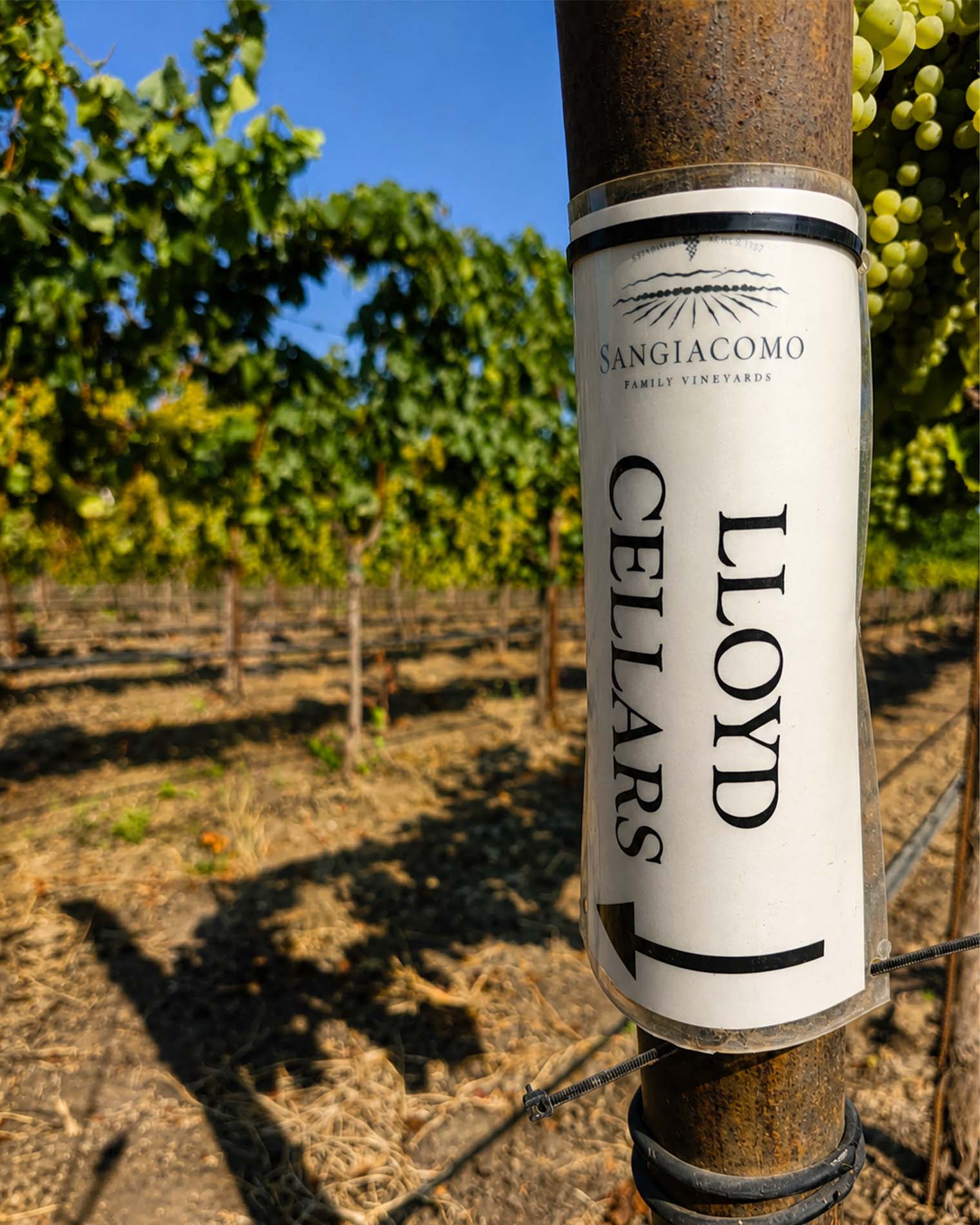
Sangiacomo, Carneros
Sauvignon Blanc called
Sangiacomo, Carneros
Sauvignon Blanc called
Aug 18
Reamer, Clarksburg
Chardonnay hanging
Reamer, Clarksburg
Chardonnay hanging
Aug 19
La Viña and Rio Vista, Sta. Rita Hills
Pinot around Sept 1
La Viña and Rio Vista, Sta. Rita Hills
Pinot around Sept 1
Aug 20
Sangiacomo, Carneros
Sauvignon Blanc picked
Sangiacomo, Carneros
Sauvignon Blanc picked
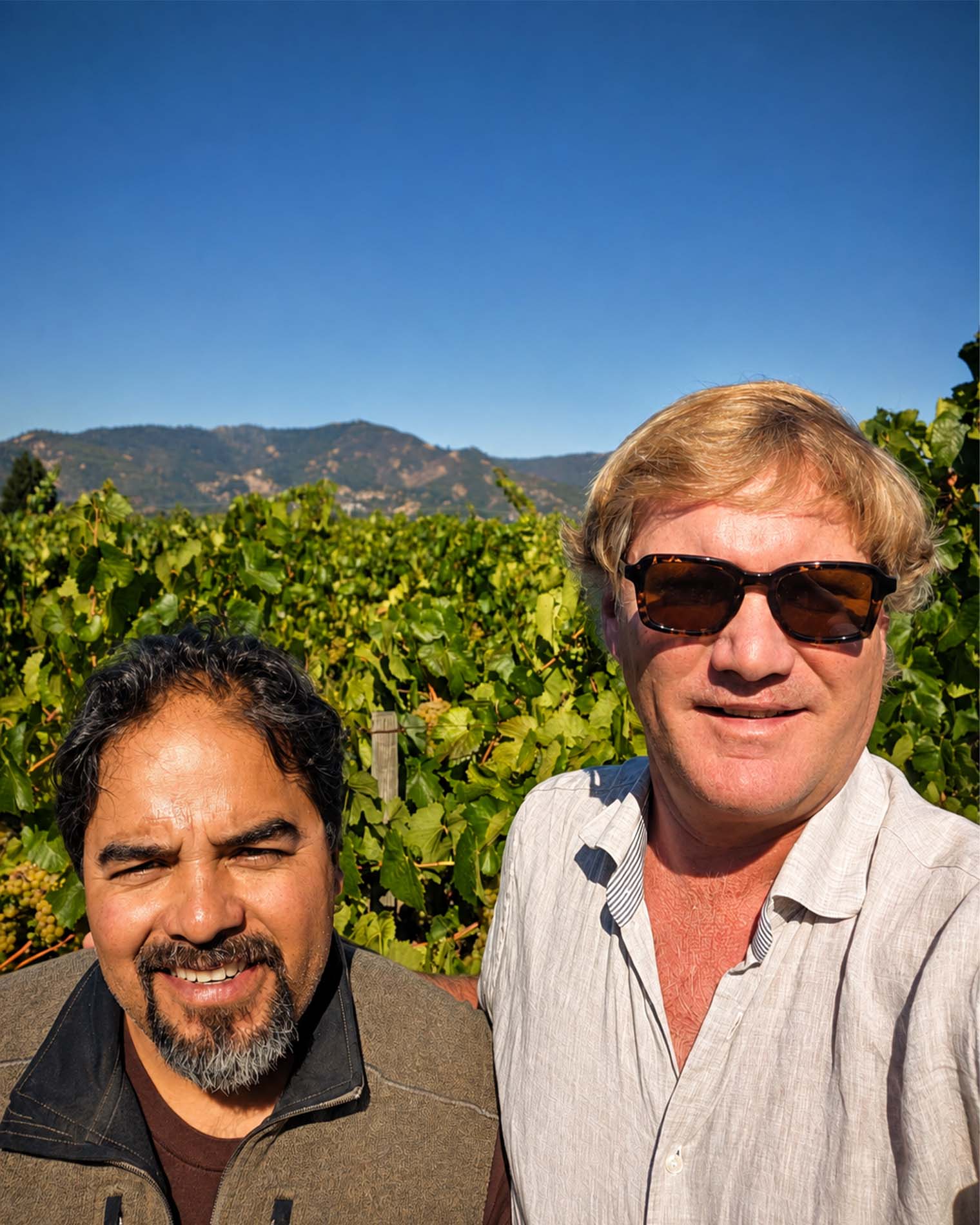
The same read from Rob everywhere he went:
They all look and taste great. We’re just waiting for the flavors to come in.
That distinction is the whole job in August. Sugar arrives on its own schedule. Flavor arrives on another. The numbers tell you the first and nothing about the second, so you drive, and you taste, and you wait longer than feels comfortable.
An early year makes that harder, not easier. Everything is running ahead of where the calendar says it should be, and the temptation is to trust the calendar.
At Sangiacomo it meant two answers from one vineyard. Amaral, where the Sauvignon Blanc grows, was ready. Green Acres and Home Ranch, the two blocks behind the Carneros Chardonnay, are weeks away. At Reamer, the Prescription Chardonnay is close but not there.
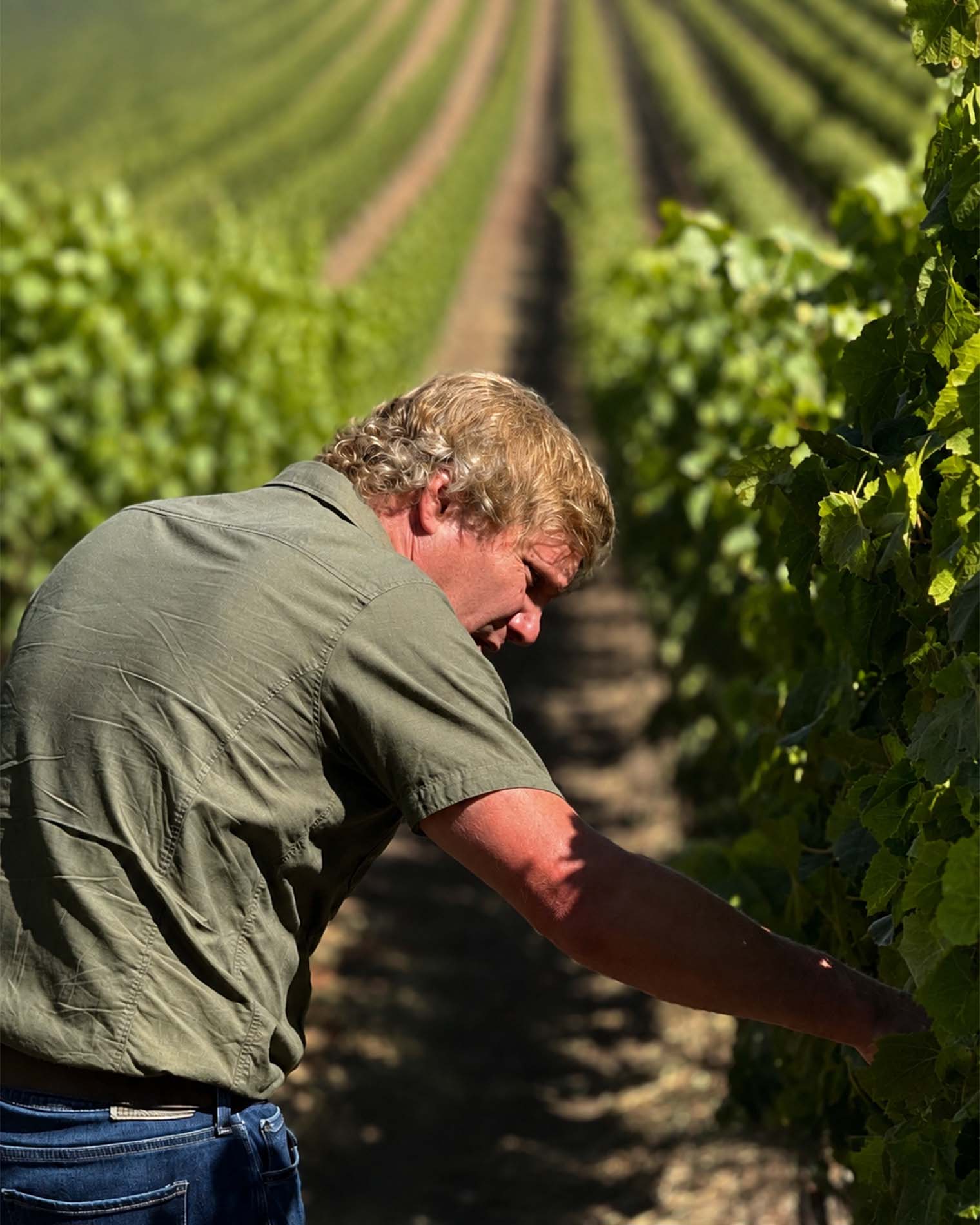
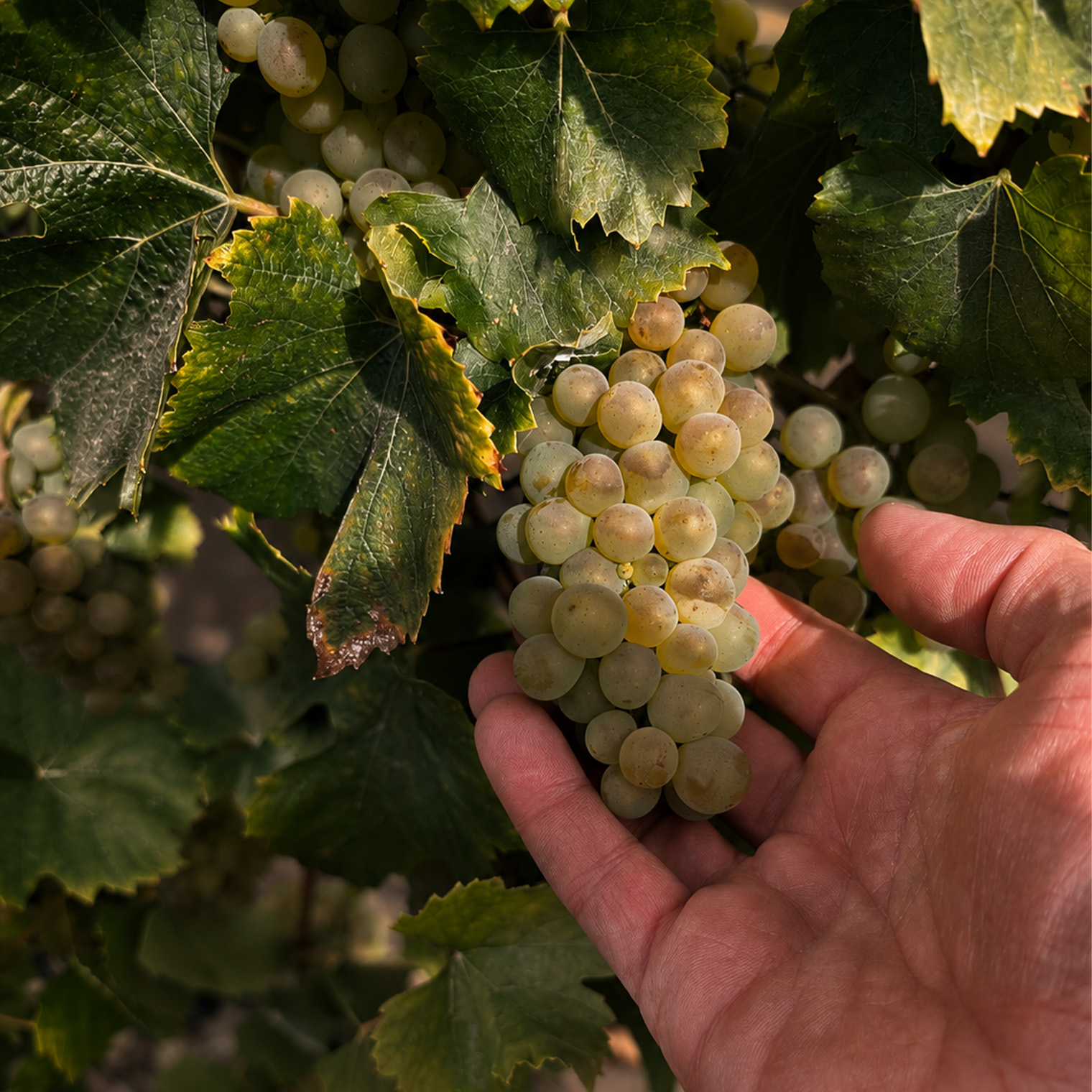
The two Sta. Rita blocks come in together. Rio Vista sits farther from the ocean and ripens faster, so it arrives with higher sugar and a little more weight. La Viña is the lighter of the two. Rob picks them around the same time and puts them together, which is the whole point. Neither one is the wine on its own.
Order matters less than people think. Planted side by side, Pinot normally comes in ahead of Chardonnay, but that flips with crop size, since a vine carrying less fruit ripens what it has faster. Both Sta. Rita blocks are down a bit this year. That is part of why Rob’s best guess today is that the Pinot beats the Carneros Chardonnay to the winery.
August 20 · Sauvignon Blanc picked
Sangiacomo, Carneros
Rob was in the Chardonnay in the morning, sampling. Still weeks from a pick.
Afternoons in the mid 80s, and as you can see cool mornings. Half past ten and the fog is still here.
That spread is the reason to farm Carneros. Warm afternoons move the sugar along, cool foggy mornings hold the acid, and the fruit gets to take its time. Fog that late in August is exactly what you want to see.
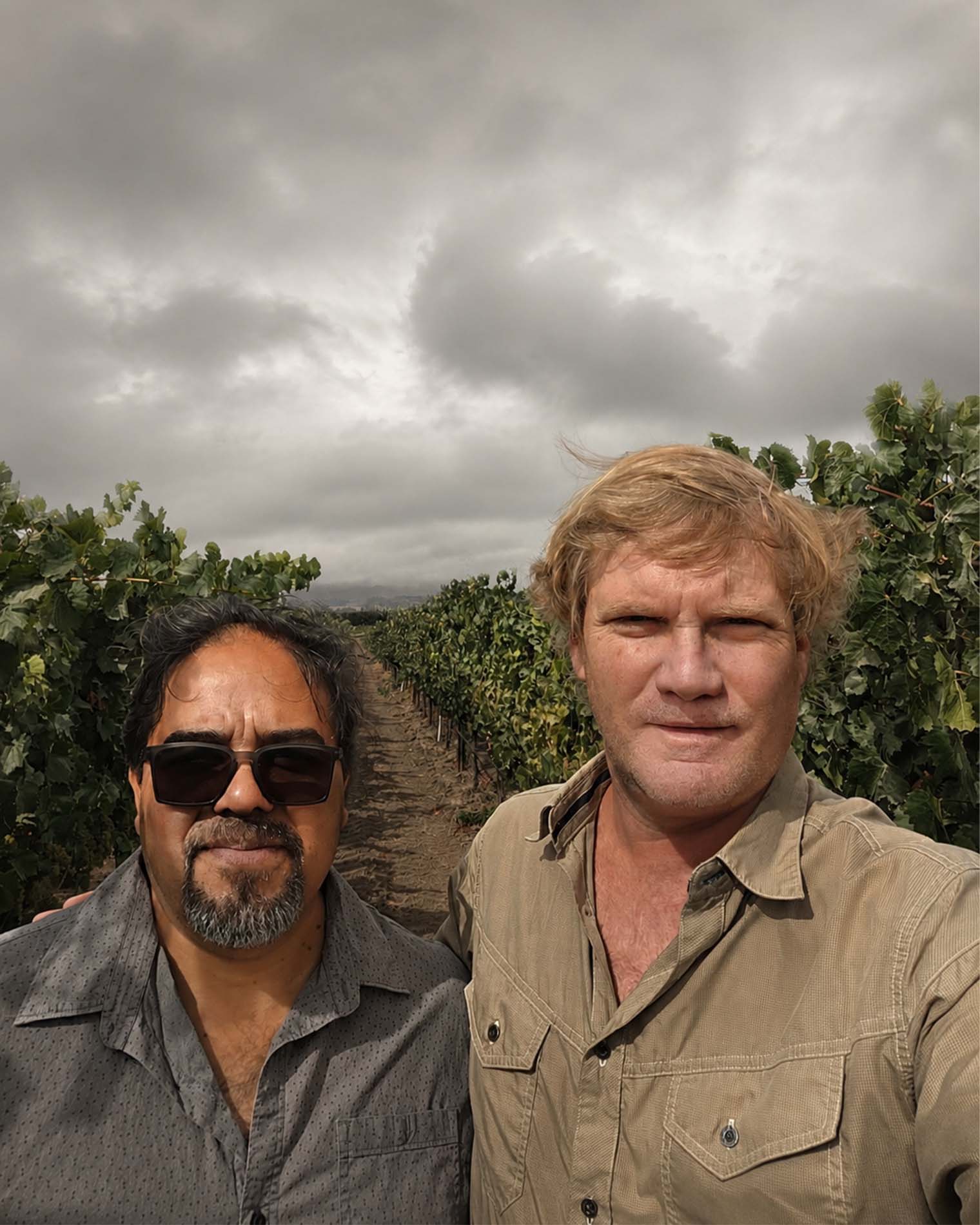
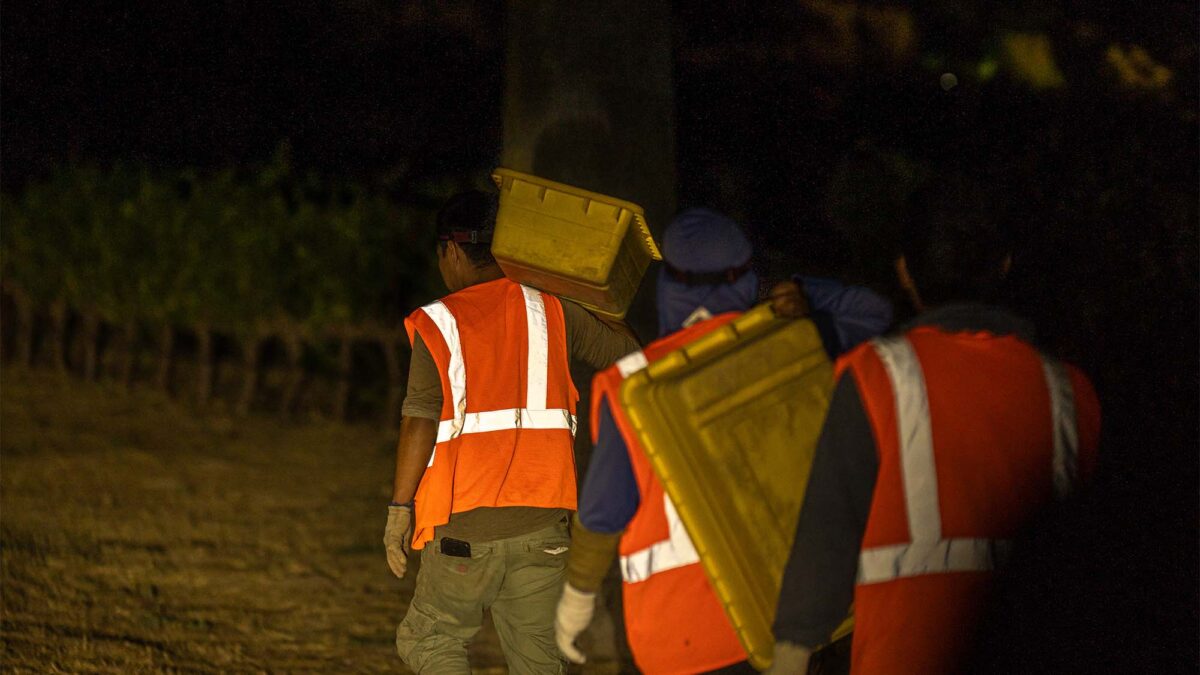
The Sauvignon Blanc came off that night.
Cold fruit holds its aromatics, which matters most in whites. It reaches the winery already at the temperature we want, so nothing has to be corrected on the pad. It is also easier on the crew than picking into afternoon heat. The cost is a shift nobody would choose, which is why the call doesn’t get made casually.
By sunrise it was at the winery.
Same vineyard, same day. One block weeks out, another one picked in the dark.
What waiting costs
Rain.
Late-season rain on ripe fruit moves water into the berries and splits the skins, and split skins on a tight cluster are an open door. Botrytis and sour rot can take a block in days if the weather stays warm behind it. Once it is in the cluster there is no cleaning it up. You sort what you can and accept what you’ve lost. The rain dilutes as well, so even fruit that stays clean can come in tasting like less than it did the week before.
The rain alone rarely does the damage. One event on a dry canopy with wind and sun behind it passes with almost nothing. The same rainfall followed by three humid days is a different vintage. The forecast that matters is not the rain. It is the seventy-two hours after.
Tight clusters are more exposed than loose ones, thin skins more than thick. Chardonnay and Pinot Noir sit on the wrong side of both, which is most of what we grow.
Why he takes the bet anyway
At larger volumes the pick is the pick. You set a window, you book the crew and the trucks and the tank space, and the date holds because too much depends on it holding. It is the right way to run those wines. It also spends the last few days of judgment before the fruit has finished telling you anything.
Rob has been on both sides of that since 2008. Lloyd started that year and never stopped, and for most of the time since he was also making calls at a scale where a pick date is a logistics problem as much as a winemaking one. Same harvest, same weeks, two entirely different ways of deciding.
These lots give him some room to wait. He can hold a block four more days on a hunch, watch a forecast turn and decide it won’t hold, move the whole thing up by a night because the flavor showed up early. He checks weather more than anyone should, and he is in the vineyard most days, asking a question the numbers can’t answer.
It isn’t less stressful. It is a different stress, and he carries it himself instead of spreading it across a production calendar. He’d tell you he prefers it. He has said so, usually while pulling over to look at another block.
Pinot at the start of September. Chardonnay after that.
Photography by Emma K., James North and Rob Lloyd.